The 2026 Outlook for Homeschooling in the US: Legal Frameworks and Curriculum Trends

Advertisements
As homeschooling continues to expand across the United States in 2026, shifting legal frameworks and new curriculum models are transforming the educational landscape.
Here is a direct overview of key policy changes, emerging learning trends, and what parents and educators should monitor next.
Advertisements
Understanding the Current Landscape of US Homeschooling
The homeschooling movement in the United States continues to evolve, driven by a variety of factors including parental choice, educational philosophies, and societal shifts.
As we approach 2026, understanding the foundational aspects of this educational path is crucial for families considering or already engaged in homeschooling.
The growth of homeschooling has been significant over the past few years, with an increasing number of families opting for home-based education.
Advertisements
This trend necessitates a deeper look into how legal requirements and educational practices are adapting to meet the diverse needs of this expanding demographic.
Federal and state governments play distinct roles in regulating homeschooling, with states holding primary authority over educational matters.
This decentralized approach creates a complex mosaic of rules and expectations that families must navigate, impacting curriculum choices and reporting obligations.
Evolving Legal Frameworks Impacting Homeschooling in 2026
The legal landscape surrounding homeschooling in the US is dynamic, with ongoing legislative efforts and court interpretations continually shaping the environment.
Families engaged in homeschooling must remain vigilant regarding changes in state laws, which can significantly alter their educational responsibilities.
States generally categorize homeschooling into different legal frameworks, such as parent-led, private school satellite programs (PSP), or certified tutor programs.
Each category comes with its own set of requirements, ranging from minimal notification to extensive portfolio reviews and standardized testing mandates.
For the 2026 outlook for homeschooling in the US, several states are reviewing their current statutes to address issues of accountability, student well-being, and educational standards.
These revisions aim to strike a balance between parental rights and the state’s interest in ensuring a quality education.
State-Specific Regulations and Their Implications
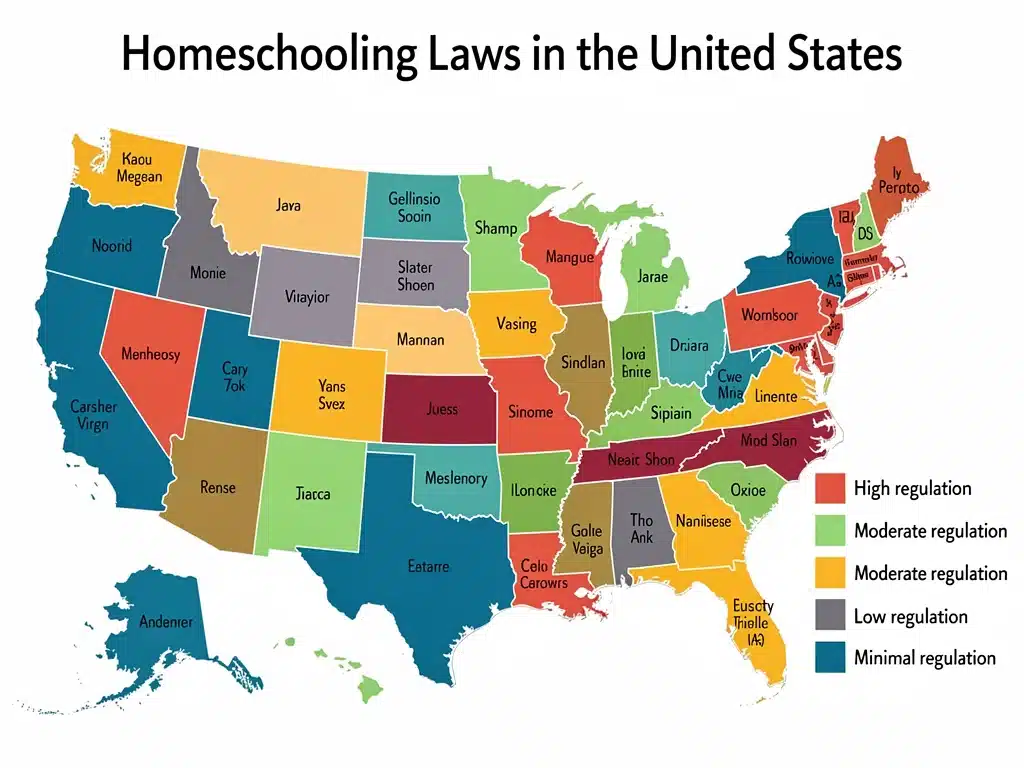
Each state in the US has unique laws governing homeschooling, leading to a patchwork of regulations across the nation.
These regulations dictate everything from notification requirements to curriculum choices and assessment methods, making it imperative for families to understand their specific state’s guidelines.
For instance, some states are considered ‘low-regulation’ with minimal oversight, requiring only a letter of intent. Conversely, ‘high-regulation’ states may demand parental qualifications, specific curriculum approval, and annual assessments or portfolio submissions.
- Notification Requirements: Many states require parents to submit a letter of intent to homeschool to their local school district or state education department.
- Curriculum Mandates: Some states specify subjects that must be taught, while others grant parents complete freedom in curriculum selection.
- Assessment Standards: Annual standardized testing or portfolio reviews are common in states with higher regulatory oversight.
- Parental Qualifications: A few states require parents to possess certain educational qualifications, such as a high school diploma or GED.
Judicial Rulings and Their Influence on Homeschooling Policy
Court decisions at both federal and state levels have historically played a significant role in defining the scope of homeschooling rights and responsibilities.
These rulings often clarify ambiguities in existing laws or set precedents for future legislative actions, directly impacting the 2026 outlook for homeschooling in the US.
Recent cases have focused on issues such as parental autonomy in educational decisions versus the state’s right to oversee education. These legal battles highlight the ongoing tension and the need for clear, equitable policies.
The outcomes of these judicial processes can lead to either more restrictive or more permissive environments for homeschooling families. Therefore, staying informed about legal challenges and their resolutions is paramount for the homeschooling community.
Emerging Curriculum Trends in Homeschooling for 2026
Curriculum trends in homeschooling are constantly evolving, reflecting advancements in educational pedagogy, technological integration, and a growing emphasis on personalized learning.
As we move towards 2026, several key trends are becoming more prominent, offering diverse options for families.
The shift towards more flexible and adaptive learning models is a significant development.
Homeschooling allows for a highly individualized approach, enabling parents to tailor educational content to their child’s specific interests, learning style, and pace.
This adaptability is a core strength of homeschooling, allowing for rapid integration of new educational philosophies and resources, which is a critical aspect of the 2026 outlook for homeschooling in the US.
Personalized Learning Paths and Customized Curricula
Personalized learning is at the heart of many homeschooling philosophies, allowing parents to create educational experiences uniquely suited to their child.
This approach moves away from a one-size-fits-all model, focusing instead on individual student needs and strengths.
Customized curricula often involve a blend of resources, including textbooks, online courses, educational software, field trips, and community-based learning experiences.
This eclectic approach ensures that learning is engaging, relevant, and effective.
- Interest-Based Learning: Tailoring lessons around a child’s passions to foster deeper engagement and retention.
- Flexible Pacing: Allowing students to master concepts at their own speed, without the pressure of a fixed academic calendar.
- Diverse Resources: Utilizing a wide array of materials from various publishers and educational platforms.
- Project-Based Learning: Engaging students in hands-on projects that integrate multiple subjects and develop critical thinking skills.
Integration of Technology and Online Learning Platforms
Technology has become an indispensable tool in modern homeschooling, providing access to a wealth of educational resources and interactive learning experiences.
Online platforms, virtual classrooms, and educational apps are transforming how homeschooling is conducted.
The proliferation of high-quality online courses, ranging from core subjects to specialized electives, has made it easier for homeschooling families to access expert instruction.
These platforms often offer flexibility, allowing students to learn at their own pace and on their own schedule.
Moreover, technology facilitates connection with other homeschooling families and educational communities, fostering collaborative learning and social interaction.
This integration is a crucial component of the 2026 outlook for homeschooling in the US.
The Role of Educational Resources and Support Networks
The availability of diverse educational resources and robust support networks is vital for the success of homeschooling families.
These resources range from curriculum providers to local co-ops and online communities, all contributing to a rich learning environment.
Curriculum publishers are continuously innovating, offering comprehensive packages, individual subject materials, and customizable options to meet varied pedagogical approaches.
The choice of resources often depends on a family’s educational philosophy and their child’s learning style.
Support networks provide invaluable assistance, offering guidance, peer support, and opportunities for social interaction for both parents and children.
These communities are essential for navigating the challenges and celebrating the successes of homeschooling.
Homeschooling Co-ops and Community Learning Initiatives
Homeschooling co-ops are collaborative groups where families come together to share teaching responsibilities, organize classes, and provide social opportunities for their children.
These co-ops can offer specialized instruction in subjects like art, music, or science, which might be challenging for individual parents to teach.
Community learning initiatives extend beyond co-ops, encompassing partnerships with local museums, libraries, and educational centers.
These collaborations provide access to unique learning experiences, expert instructors, and a broader social context for homeschooled children.
The growth of these community-based programs reflects a desire among homeschooling families for both academic enrichment and social engagement, addressing common concerns about isolation.
This collaborative spirit is a key driver in the 2026 outlook for homeschooling in the US.

Addressing Challenges and Ensuring Accountability in Homeschooling
While homeschooling offers many benefits, it also presents unique challenges, including ensuring educational quality, fostering social development, and maintaining parental well-being.
Addressing these challenges is crucial for the continued growth and success of the movement.
Accountability mechanisms, whether state-mandated or self-imposed, are essential for demonstrating that homeschooled children are receiving a comprehensive education.
These can include standardized tests, portfolio reviews, or regular progress reports.
The homeschooling community is actively working to develop best practices and resources to support families in overcoming these hurdles, ensuring that children thrive academically and socially.
This proactive approach is central to the 2026 outlook for homeschooling in the US.
Socialization and Extracurricular Opportunities for Homeschooled Children
One of the most common concerns about homeschooling is its potential impact on a child’s socialization.
However, homeschooling families actively seek out and create numerous opportunities for social interaction and extracurricular engagement.
These opportunities include participation in sports leagues, community clubs, volunteer activities, and homeschooling co-ops.
Many homeschooled children are highly involved in their communities, developing strong social skills and diverse friendships.
Furthermore, the flexibility of homeschooling allows children to pursue passions and interests outside of traditional school hours, fostering well-rounded development and exposure to a wider range of experiences than often available in conventional schooling.
Future Projections and the Impact of Societal Shifts
Looking ahead to 2026 and beyond, several societal shifts are likely to influence the trajectory of homeschooling in the US.
Economic conditions, evolving parental priorities, and technological advancements will continue to shape how families choose to educate their children.
The increased recognition of diverse learning styles and the desire for more individualized educational experiences are powerful forces driving the growth of homeschooling.
Parents are increasingly empowered to make educational choices that best suit their family’s values and children’s needs.
The ongoing dialogue between policymakers, educators, and homeschooling advocates will be critical in developing supportive and effective frameworks that benefit all children.
This collaborative effort defines the 2026 outlook for homeschooling in the US.
The Role of Advocacy Groups in Shaping Homeschooling Policy
Homeschooling advocacy groups play a pivotal role in protecting and promoting the rights of homeschooling families.
These organizations actively engage with legislators, educate the public, and provide legal support to ensure a favorable environment for home education.
Their efforts often involve monitoring proposed legislation, testifying at hearings, and organizing grassroots campaigns to influence policy decisions.
These groups are instrumental in shaping the legal and social acceptance of homeschooling across the nation.
By providing resources, legal guidance, and community support, advocacy groups empower families to navigate the complexities of homeschooling while safeguarding their educational freedoms.
Their continued influence is a vital part of the 2026 outlook for homeschooling in the US.
Preparing for Homeschooling in 2026: Resources and Recommendations
For families considering or currently engaged in homeschooling, preparation is key to a successful educational journey.
Understanding available resources and implementing effective strategies can significantly enhance the learning experience.
Access to reliable information on state laws, curriculum options, and support networks is paramount. Websites of state education departments, homeschooling organizations, and online forums provide valuable insights and practical advice.
Developing a clear educational plan, setting realistic goals, and fostering a love of learning are essential components of effective homeschooling.
Proactive engagement with the homeschooling community can also provide invaluable support and inspiration.
Key Resources for Prospective and Current Homeschoolers
A wealth of resources exists to support homeschooling families, ranging from comprehensive curriculum packages to online learning platforms and local community groups.
Identifying and utilizing these resources effectively can greatly enrich the homeschooling experience.
Many organizations offer free or low-cost educational materials, workshops, and conferences designed to empower homeschooling parents.
These resources often provide guidance on everything from lesson planning to record-keeping.
- State Homeschooling Associations: Provide state-specific legal information, resources, and advocacy.
- Online Curriculum Providers: Offer structured courses, virtual classrooms, and interactive learning tools.
- Local Homeschool Co-ops: Facilitate group classes, field trips, and social activities.
- Educational Technology Tools: Apps, software, and online platforms for supplemental learning and skill development.
| Key Point | Brief Description |
|---|---|
| Legal Frameworks | Diverse state regulations govern homeschooling, with ongoing legislative and judicial reviews. |
| Curriculum Trends | Emphasis on personalized learning, technology integration, and diverse educational resources. |
| Support Networks | Co-ops, community initiatives, and advocacy groups provide crucial assistance to families. |
| Future Outlook | Continued growth influenced by societal shifts, parental priorities, and technological advancements. |
Frequently Asked Questions About Homeschooling in 2026
Legal requirements for homeschooling vary significantly by state, ranging from simple notification to extensive portfolio reviews and standardized testing. Families must research and comply with their specific state’s laws, which are subject to ongoing legislative changes and judicial interpretations as we approach 2026.
Curriculum trends for homeschooling in 2026 emphasize personalized learning, integrating diverse resources and advanced technology. There’s a growing focus on student-led projects, interest-based learning, and the use of online platforms to tailor education to individual needs and learning styles effectively.
Online learning platforms are becoming increasingly integral to homeschooling by 2026, offering flexible access to a wide array of courses, virtual classrooms, and interactive educational tools. They provide opportunities for specialized instruction and connect families to broader learning communities, enhancing the overall educational experience.
Homeschooling families ensure socialization through active participation in co-ops, community sports, clubs, and volunteer activities. The flexibility of homeschooling allows children to engage in numerous extracurriculars, fostering diverse friendships and strong social skills, often leading to more varied social interactions than traditional schooling.
In 2026, homeschooling families can access extensive resources, including state homeschooling associations for legal guidance, online curriculum providers, local co-ops for group activities, and educational technology tools. These resources offer comprehensive support for academic planning, social engagement, and navigating legal requirements effectively.
Impact and Implications
The evolving landscape of The 2026 Outlook for Homeschooling in the US: Legal Frameworks and Curriculum Trends signals a continued shift towards more flexible and personalized educational approaches.
Families, policymakers, and educators must remain informed about these dynamic changes. Monitoring state legislative actions and judicial decisions will be crucial, as these will directly influence the operational aspects of homeschooling.
To explore more about the recent surge and research behind this growing educational movement, read the report on FEE: Homeschooling Is Booming, New Study Shows.
The increasing integration of technology and community-based learning also points to a future where educational options are more diverse and accessible, empowering parents to make informed choices for their children’s academic success and well-being.