Inside the 2026 National Literacy Standards: What 3rd Grade Reading Benchmarks Mean for Academic Support

Advertisements
Ensuring early elementary students reach critical reading milestones is becoming a top priority across school districts. Updated National Literacy Standards set clear expectations for foundational reading skills, directly shaping how schools evaluate early childhood fluency.
Focusing on third-grade comprehension benchmarks allows educators and parents to identify learning gaps before students transition from learning to read to reading to learn.
These federal learning directives emphasize phonics proficiency, vocabulary acquisition, and structured intervention for struggling readers.
Advertisements
Tracking these updated academic guidelines helps families and teachers provide timely intervention and reading support. Here is a breakdown of what the new benchmark criteria require and how they affect student progress.
Understanding the Core of the 2026 National Literacy Standards
The 2026 National Literacy Standards represent a concerted effort to enhance reading outcomes nationwide, particularly focusing on foundational skills. These standards aim to provide a clearer, more consistent framework for literacy education from early childhood through elementary grades.
Advertisements
The impetus behind these new benchmarks stems from ongoing concerns about reading proficiency rates and the desire to equip all students with strong literacy skills by the critical 3rd grade milestone.
Federal initiatives and educational research have consistently highlighted the long-term impact of early reading success.
These standards are designed to foster a more unified approach to literacy instruction, ensuring that students receive high-quality, evidence-based teaching regardless of their location.
The emphasis is on early intervention and robust support systems to prevent reading difficulties from escalating.
Key Shifts in Foundational Reading Skills
The new standards place a renewed emphasis on the science of reading, integrating phonics, phonemic awareness, fluency, vocabulary, and comprehension into a cohesive framework.
This approach moves away from less structured methods, advocating for explicit and systematic instruction.
Educators are expected to adapt their teaching methodologies to align with these evidence-based practices, which have been shown to be most effective for developing strong readers. Professional development will play a vital role in ensuring teachers are well-equipped to implement these changes.
- Explicit phonics instruction from kindergarten.
- Systematic development of phonemic awareness.
- Emphasis on reading fluency with appropriate texts.
- Robust vocabulary acquisition strategies.
The goal is to ensure that all students build a solid foundation in these core areas, making the transition to more complex reading tasks smoother and more successful. This proactive stance aims to reduce the number of students struggling with reading by 3rd grade.
Impact on 3rd Grade Reading Benchmarks
The 2026 National Literacy Standards specifically elevate the importance of 3rd grade reading benchmarks, recognizing this as a pivotal point in a child’s academic trajectory.
The new standards aim to ensure that by the end of 3rd grade, students are proficient readers capable of accessing grade-level content.
Failure to meet 3rd grade reading benchmarks often predicts future academic challenges, making this threshold a critical indicator of long-term success. The updated standards seek to provide clearer, more rigorous expectations for what constitutes reading proficiency at this stage.
These benchmarks will likely influence state-level assessments and accountability measures, putting greater pressure on schools and districts to demonstrate student growth in reading. The focus is on ensuring that students are not just decoding words but truly comprehending complex texts.
Defining Reading Proficiency at Grade 3
Under the 2026 National Literacy Standards, 3rd grade reading proficiency will encompass not only the ability to read accurately and fluently but also to understand and analyze various types of texts.
This includes making inferences, identifying main ideas, and summarizing information effectively.
The benchmarks will also consider a student’s ability to engage with diverse texts, including informational and literary genres, and to articulate their understanding both orally and in writing. The emphasis is on a holistic view of reading comprehension.
- Reading and comprehending grade-level literary texts.
- Analyzing informational texts for key details and main ideas.
- Using context clues to determine the meaning of unknown words.
- Demonstrating fluent reading with expression and appropriate pacing.
These detailed expectations aim to provide a more precise measure of a student’s readiness for the increasing demands of upper elementary and middle school curricula. The benchmarks serve as a clear target for educators and a guide for parents.
Strategies for Enhanced Academic Support
Meeting the intensified 3rd grade reading benchmarks within the 2026 National Literacy Standards will necessitate robust and multifaceted academic support systems. Schools and districts are already beginning to explore innovative strategies to bolster student literacy.
Effective academic support will extend beyond the classroom, involving parents, community resources, and specialized interventions for struggling readers. The goal is to create a comprehensive ecosystem that nurtures reading development at every level.
Tailored interventions, diagnostic assessments, and data-driven instruction will become even more critical in identifying and addressing individual student needs. This proactive approach aims to close achievement gaps before they become entrenched.
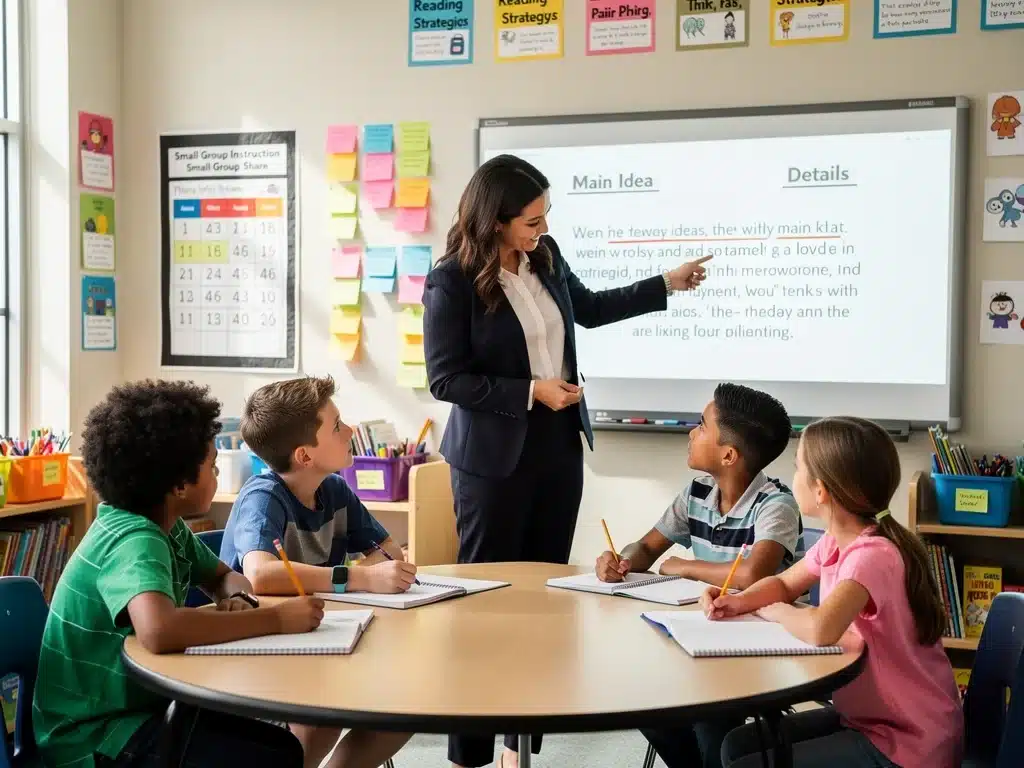
Implementing Targeted Interventions
Schools will need to implement highly targeted reading interventions for students who are not meeting grade-level expectations. These interventions should be evidence-based, delivered by trained professionals, and closely monitored for effectiveness.
Differentiated instruction within the regular classroom will also be crucial, allowing teachers to tailor their lessons to meet the varied needs of learners. This includes providing additional support for struggling readers and enriching opportunities for advanced students.
- Small group instruction focused on specific skill deficits.
- One-on-one tutoring for students with significant reading challenges.
- Leveraging educational technology for personalized practice.
- Regular progress monitoring to adjust interventions as needed.
The success of these interventions hinges on early identification and consistent, high-quality delivery, ensuring that every student has the opportunity to achieve the 2026 National Literacy Standards.
Curriculum and Instructional Adjustments
The adoption of the 2026 National Literacy Standards will inevitably lead to significant adjustments in curriculum design and instructional practices. Educational materials and teaching methods must align with the new, more rigorous benchmarks.
Curriculum developers are tasked with creating resources that reflect the science of reading and provide explicit instruction in foundational literacy skills. This includes selecting appropriate texts and designing engaging activities that promote deep comprehension.
Teachers will need ongoing professional development to effectively implement these curriculum changes and integrate new instructional strategies into their daily routines. This investment in educator training is paramount for successful standard implementation.
Redesigning Classroom Practices
Classroom practices will evolve to prioritize systematic phonics and phonemic awareness instruction, particularly in early grades. Teachers will utilize structured literacy approaches to ensure all students build strong decoding skills.
The emphasis on rich, diverse texts will also necessitate changes in how reading materials are selected and integrated into lessons. Students will be exposed to a wider range of genres and topics to build background knowledge and vocabulary.
- Daily dedicated time for explicit phonics instruction.
- Incorporation of complex texts across subjects.
- Strategies for teaching academic vocabulary in context.
- Opportunities for collaborative discussions around texts.
These instructional shifts are designed to create a more effective and equitable learning environment, ensuring that all students are prepared to meet the demands of the 2026 National Literacy Standards by 3rd grade.
The Role of Assessment and Accountability
With the introduction of the 2026 National Literacy Standards, assessment practices will undergo significant refinement to accurately measure student progress toward 3rd grade reading benchmarks. New assessment tools may be developed or existing ones revised.
Accountability measures for schools and districts will likely be strengthened, tying performance more directly to student achievement in literacy. This increased scrutiny aims to ensure that all educational institutions are actively working to meet the new standards.
The data gleaned from these assessments will be crucial for informing instructional decisions, identifying areas for improvement, and demonstrating the effectiveness of academic support programs. Transparency in reporting will also be a key component.
Enhancing Diagnostic and Formative Assessments
Diagnostic assessments will become even more critical for identifying specific reading difficulties early on, allowing for timely and targeted interventions. These assessments provide granular data on a student’s strengths and weaknesses.
Formative assessments, integrated into daily instruction, will help teachers continuously monitor student understanding and adjust their teaching as needed. This ongoing feedback loop is essential for responsive instruction under the 2026 National Literacy Standards.
- Standardized screening tools for early identification of reading risks.
- Curriculum-based measures to track progress within specific skills.
- Performance-based assessments to evaluate comprehension and analysis.
- Regular data analysis to inform instructional planning and resource allocation.
The robust assessment framework will ensure that educators have the necessary tools to track student growth and ensure accountability in meeting the 2026 National Literacy Standards for 3rd grade reading.
Parental Engagement and Home Support
The success of the 2026 National Literacy Standards, particularly for 3rd grade reading benchmarks, relies heavily on strong parental engagement and consistent home support. Parents are vital partners in fostering a child’s reading development.
Schools will need to proactively communicate with families about the new standards and provide resources to help parents support their children’s literacy at home. This collaboration creates a seamless learning environment.
Engaging parents in activities such as reading aloud, discussing books, and practicing foundational skills can significantly reinforce classroom instruction. Empowering families is a key component of the overall strategy.

Building a Culture of Reading at Home
Encouraging a love of reading at home through regular reading routines and access to diverse books is paramount. Parents can serve as powerful models for reading, demonstrating its value and enjoyment.
Schools can offer workshops or provide guidance on effective strategies for supporting reading at home, such as asking open-ended questions about texts or engaging in word games. These resources help bridge the school-home gap.
- Establishing a consistent daily reading time.
- Visiting local libraries regularly to explore new books.
- Discussing stories and informational texts to build comprehension.
- Practicing sight words and phonics skills through engaging games.
When home and school work in concert, the likelihood of students achieving the 2026 National Literacy Standards significantly increases, particularly at the crucial 3rd grade reading benchmark.
Challenges and Opportunities for Implementation
Implementing the 2026 National Literacy Standards will undoubtedly present both challenges and significant opportunities for the education system. Addressing potential hurdles proactively is essential for a smooth transition.
Challenges may include securing adequate funding for professional development, acquiring new curriculum materials, and ensuring equitable access to resources across diverse communities. These logistical considerations require careful planning.
However, the opportunities are immense, promising a more literate generation equipped with the foundational skills necessary for lifelong learning and success. The unified framework offers a chance to elevate reading instruction nationwide.
Navigating Resource Allocation and Training
One primary challenge will be the equitable allocation of resources, ensuring that all schools, regardless of their socioeconomic status, have the necessary tools and training to implement the new standards. This includes access to qualified literacy specialists.
Extensive professional development for educators will be crucial, focusing not just on the ‘what’ but also the ‘how’ of implementing the science of reading. Ongoing support and coaching will be vital for sustained change.
- Funding for high-quality, sustained professional learning.
- Recruitment and retention of skilled literacy coaches.
- Development of new, standards-aligned instructional materials.
- Strategies to support diverse learners, including English language learners and students with disabilities.
By effectively addressing these challenges, the education system can fully capitalize on the opportunities presented by the 2026 National Literacy Standards to significantly improve 3rd grade reading outcomes.
| Key Point | Brief Description |
|---|---|
| Core Standards Focus | Emphasis on science of reading, explicit phonics, and comprehensive literacy skills. |
| 3rd Grade Benchmarks | Pivotal for academic success, requiring fluent and comprehensive reading ability. |
| Academic Support | Targeted interventions, data-driven instruction, and parental engagement are crucial. |
| Implementation Outlook | Challenges in resources and training, but significant opportunities for literacy improvement. |
Frequently Asked Questions About 2026 National Literacy Standards
The main goals are to improve reading proficiency nationwide by establishing clearer, more consistent expectations for literacy education. They focus on foundational reading skills based on the science of reading, aiming to ensure all students are proficient by 3rd grade.
The 3rd grade reading benchmarks will become more rigorous, emphasizing not only decoding and fluency but also deep comprehension, critical analysis of texts, and the ability to engage with diverse genres. These changes aim to better prepare students for future academic demands.
Academic support will include targeted interventions, differentiated instruction, and data-driven teaching. Schools will implement evidence-based strategies, small group instruction, and one-on-one tutoring to address individual student needs and ensure all students meet the standards.
Parents can support their children by establishing consistent reading routines, visiting libraries, discussing books, and practicing foundational skills through games. Schools will also provide resources and guidance to help families reinforce literacy learning at home effectively.
Key challenges include securing adequate funding for new curriculum materials and professional development, ensuring equitable resource allocation across all schools, and providing comprehensive training for educators to adopt new instructional practices. These require strategic planning and investment.
Looking Ahead to the 2026 National Literacy Standards
The rollout of the 2026 National Literacy Standards signifies a pivotal moment for education in the United States, particularly concerning 3rd grade reading benchmarks.
These standards promise to elevate reading instruction and outcomes, but their success hinges on comprehensive implementation and sustained support.
Educators, policymakers, and parents must remain informed and engaged as these changes unfold, ensuring that every child receives the necessary academic foundation.
Monitoring early adoption and the impact on student progress will be crucial in the coming years as the new framework takes full effect across the nation.