PSLF Certification for Educators: 120-Payment Milestone 2026

Advertisements
Navigating your student debt cancellation journey requires staying proactive with your annual employment verifications and servicer records. Submitting your PSLF Certification as an educator ensures that every qualifying monthly payment gets officially logged toward your ultimate debt discharge goal.
Public school teachers and qualified educational staff must maintain full-time employment at an eligible institution while fulfilling 120 required billing cycles.
Keeping your income-driven repayment paperwork up to date and verifying qualified employer status prevents unexpected administrative delays near your ten-year milestone.
Advertisements
Tracking your progress systematically ensures you capture every earned credit and successfully reach total federal student loan relief. Here is how educators can verify their service credits and ensure a smooth path to complete loan cancellation.
Navigating the 120-Payment Milestone for PSLF Certification
Educators across the United States are keenly focused on the Public Service Loan Forgiveness (PSLF) program, particularly as the 120-payment milestone approaches for many by 2026. This critical juncture represents the culmination of a decade of qualifying payments towards student loan forgiveness.
Understanding the intricacies of the PSLF program, including eligibility requirements, payment tracking, and the certification process, is paramount for educators aiming to successfully achieve loan forgiveness.
Advertisements
The Department of Education continues to refine guidelines, making it essential for applicants to stay informed and proactive.
The year 2026 is poised to be a significant period for many educators who began their qualifying employment and payments around 2016. Proactive preparation and meticulous record-keeping will be key to navigating the certification process smoothly.
Understanding PSLF Eligibility and Service Requirements
To qualify for PSLF, educators must meet specific criteria related to their employment and loan types. This includes working full-time for a qualifying employer, such as a government organization or a non-profit organization, for the duration of their 120 qualifying payments.
Direct Loans are the only federal student loans eligible for PSLF. Borrowers with other federal loan types, such as FFEL Program loans or Perkins Loans, must consolidate them into a Direct Consolidation Loan to become eligible.
The definition of “full-time” generally means working at least 30 hours per week, or the equivalent of a full-time position as defined by the employer.
It is crucial for educators to verify their employment status with their human resources department to ensure it aligns with PSLF requirements.
Qualifying Employment for Educators
- Government organizations at any level (federal, state, local, or tribal).
- Non-profit organizations that are tax-exempt under Section 501(c)(3) of the Internal Revenue Code.
- Other non-profit organizations that provide certain public services.
The type of school or educational institution is a primary factor in determining if an educator’s employment qualifies. Public schools, colleges, and universities, as well as many private non-profit educational institutions, typically meet the qualifying employer criteria.
The Importance of Qualifying Payments and Income-Driven Repayment Plans
A qualifying payment for PSLF is a payment made after October 1, 2007, under a qualifying income-driven repayment (IDR) plan, for the full amount due as shown on the bill, and within 15 days of the due date. These payments must also be made while employed full-time by a qualifying employer.
Income-Driven Repayment (IDR) plans are critical for PSLF because they adjust monthly loan payments based on income and family size, often resulting in lower payments than standard plans. This makes the 120-payment journey more manageable for many educators.
It is imperative that educators are enrolled in an eligible IDR plan for all 120 payments. Any payments made under a non-qualifying plan, such as the Standard Repayment Plan (unless it’s the 10-year standard plan and payments are made during qualifying employment), will not count towards PSLF.
Eligible Income-Driven Repayment Plans
- Revised Pay As You Earn (REPAYE) Plan
- Pay As You Earn (PAYE) Plan
- Income-Based Repayment (IBR) Plan
- Income-Contingent Repayment (ICR) Plan
Understanding which IDR plan best suits an individual’s financial situation is a key step in maximizing their chances of achieving PSLF. Regular review of payment history and plan enrollment is highly recommended.
Step-by-Step PSLF Certification Process for 2026
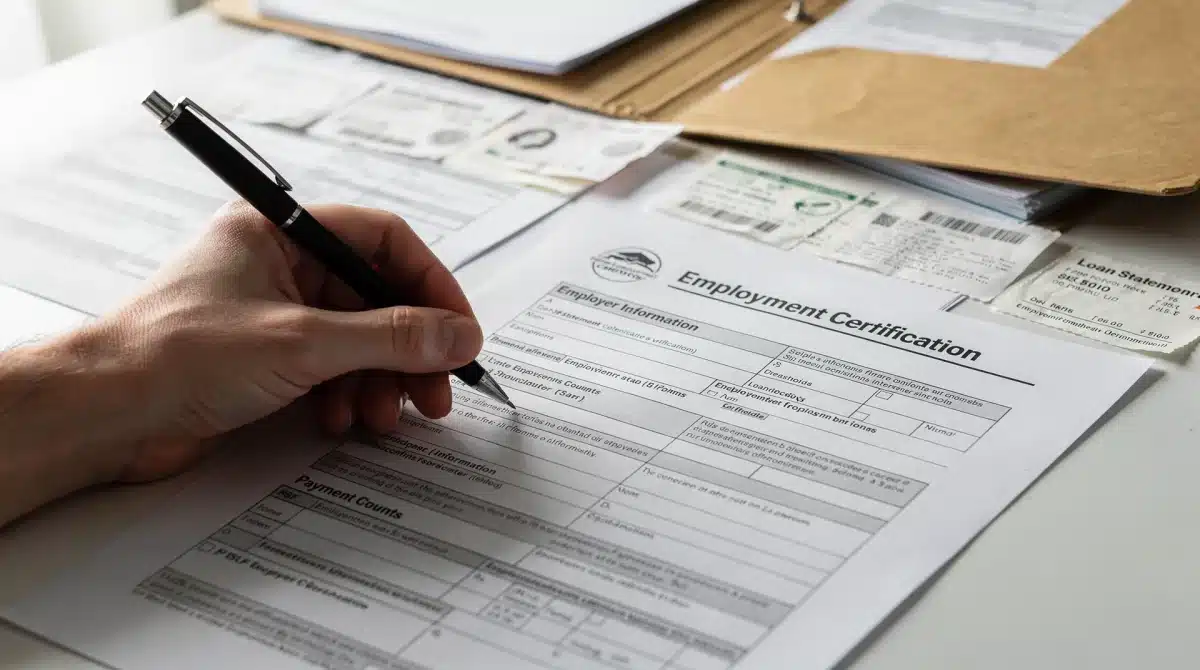
The PSLF certification process involves several crucial steps that educators must follow diligently. The primary tool for this is the PSLF Employment Certification Form (ECF), which verifies qualifying employment and calculates eligible payments.
Educators should submit the ECF annually or whenever they change employers. This proactive approach helps track progress towards the 120-payment milestone and identifies any discrepancies early, preventing issues closer to the 2026 forgiveness date.
Upon submission, the loan servicer (currently MOHELA for PSLF) reviews the form, confirms employment, and updates the count of qualifying payments. Regular communication with the servicer is vital for maintaining accurate records.
Submitting the Employment Certification Form
- Complete Section 1 (Borrower Information) and Section 2 (Employment Information).
- Have an authorized official from your qualifying employer complete and sign Section 3 (Employer Certification).
- Submit the signed form to MOHELA via mail, fax, or upload through their online portal.
It is important to retain copies of all submitted forms and any correspondence with the loan servicer. This documentation serves as a critical backup in case of any administrative errors or disputes regarding payment counts.
Preparing for the Final PSLF Application in 2026
As educators approach their 120th qualifying payment, the focus shifts from certification to the final PSLF application. This application is submitted after all 120 payments have been made and verified.
The final application for PSLF is typically submitted through the same portal or methods used for the ECF. It signals to the loan servicer that the borrower believes they have met all requirements and are ready for their loans to be forgiven.
It is crucial to ensure all prior employment certification forms are up-to-date and all qualifying payments have been accurately counted. Any gaps or inconsistencies should be addressed well in advance of the final application submission.
Verification of the 120-payment milestone is a detailed process that can take time. Patience and continued engagement with MOHELA are necessary during this final review phase. The goal is to ensure a smooth transition to loan forgiveness for educators.
Common Pitfalls and How to Avoid Them
Despite the program’s benefits, many educators encounter challenges that can delay or jeopardize their PSLF eligibility. One common issue is incorrect repayment plan enrollment, where payments made under ineligible plans do not count.
Another frequent pitfall is inconsistent employment certification. Failing to submit the ECF regularly can lead to discrepancies in payment counts and delays in the forgiveness process, especially for those nearing the 120-payment milestone.
Errors in employer certification, such as an unauthorized person signing the form or incorrect employer information, can also cause significant setbacks. Educators must ensure their employer’s HR department is familiar with PSLF requirements.
Key Mistakes to Avoid
- Not consolidating non-Direct Loans into a Direct Consolidation Loan.
- Making payments under a non-qualifying repayment plan.
- Failing to submit the Employment Certification Form regularly.
- Changing employment to a non-qualifying employer before reaching 120 payments.
Educators should proactively review their loan details and payment history on the MOHELA website. This vigilance helps in early detection and correction of potential issues, ensuring steady progress toward PSLF Certification Educators 2026.
Impact of Recent PSLF Program Changes and Waivers
The PSLF program has undergone significant changes in recent years, including temporary waivers that allowed certain previously ineligible payments to count towards forgiveness.
These waivers have provided a lifeline for many educators who had struggled with the program’s stringent requirements.
While the temporary waivers have largely concluded, their impact continues to be felt as many borrowers have seen their payment counts increase, bringing them closer to the 120-payment milestone.
It is important for educators to understand how these past changes might affect their current standing.
The Department of Education has also worked to streamline the PSLF process, making it more accessible and transparent. These ongoing efforts aim to reduce administrative burdens and increase the rate of successful forgiveness for eligible public servants, including educators.
Staying informed about any future policy changes or permanent reforms to the PSLF program is essential. Official announcements from the Department of Education and reliable financial aid resources should be regularly consulted to ensure compliance and benefit from any new provisions.
Resources and Support for Educators Seeking PSLF
A wealth of resources is available to assist educators in navigating the complexities of PSLF. The Federal Student Aid (FSA) website is the primary source for official information, forms, and guidance on the program.
MOHELA, as the dedicated servicer for PSLF, offers online tools for tracking payment counts, submitting forms, and communicating with representatives. Their portal is an invaluable resource for monitoring progress towards the 120-payment milestone.
Non-profit organizations and financial aid counselors also provide free or low-cost assistance to borrowers. These experts can offer personalized advice, help resolve issues, and ensure educators are on the right track for PSLF Certification Educators 2026.
Helpful Resources for PSLF Applicants
- Federal Student Aid (FSA) website: studentaid.gov
- MOHELA’s PSLF portal
- Student loan ombudsman group for dispute resolution
Utilizing these resources can significantly ease the burden of understanding and complying with PSLF requirements. Proactive engagement with available support systems can make a substantial difference in achieving loan forgiveness.
| Key Point | Brief Description |
|---|---|
| 120-Payment Milestone | Achieving 120 qualifying monthly payments for PSLF by 2026 is critical. |
| Eligibility Criteria | Full-time employment with a qualifying employer and Direct Loans are essential. |
| Certification Process | Submit the PSLF Employment Certification Form (ECF) annually or with job changes. |
| Repayment Plans | Enrollment in an Income-Driven Repayment (IDR) plan is mandatory for qualifying payments. |
Frequently Asked Questions About PSLF Certification
The 120-payment milestone refers to making 120 qualifying monthly payments under an eligible repayment plan while working full-time for a qualifying employer. This typically equates to 10 years of payments. Reaching this milestone is the final step before applying for PSLF.
Only Direct Loans qualify for PSLF. If you have other federal student loan types, such as FFEL Program loans or Perkins Loans, you must consolidate them into a Direct Consolidation Loan to become eligible. This consolidation should be done as early as possible.
Educators should submit the PSLF Employment Certification Form (ECF) annually or whenever they change employers. This helps ensure that payment counts are accurate and up-to-date, preventing potential issues when applying for forgiveness later on.
Payments made under non-qualifying repayment plans generally do not count towards PSLF. It is crucial to enroll in an eligible IDR plan (REPAYE, PAYE, IBR, or ICR) as soon as possible to ensure your payments are counted. Contact your loan servicer for guidance.
After your 120th qualifying payment, you will need to submit the final PSLF application. Your loan servicer will then review your employment and payment history to confirm eligibility. Once approved, the remaining balance on your Direct Loans will be forgiven.
Looking Ahead: Ensuring PSLF Success for Educators
The journey towards PSLF Certification Educators 2026 requires diligence, accurate record-keeping, and proactive engagement with the loan servicer. Educators who consistently meet the program’s requirements and stay informed about policy changes are best positioned for success.
As the 2026 milestone approaches for many, continued vigilance in submitting Employment Certification Forms, maintaining eligible repayment plans, and verifying payment counts will be paramount.
These steps are not merely administrative; they are critical components of securing financial relief through PSLF.
The Department of Education‘s ongoing efforts to refine and streamline the PSLF program offer a hopeful outlook for educators dedicated to public service. By leveraging available resources and adhering to established guidelines, thousands of educators can achieve the loan forgiveness they deserve.