Insider Strategies: Securing Over $10,000 in US Education Grants for Adult Learners in 2026

Advertisements
Securing over $10,000 in US education grants as an adult learner in 2026 is highly achievable with the right strategy.
This guide provides a direct, objective breakdown of essential federal, state, and private funding sources. Learn how to navigate eligibility requirements, streamline your application process, and utilize smart planning to fund your education debt-free.
Advertisements
Understanding the 2026 Grant Landscape for Adult Learners
The landscape for US adult education grants in 2026 is dynamic, influenced by federal, state, and private sector initiatives aimed at workforce development and lifelong learning.
Identifying the right programs requires a thorough understanding of these various funding streams and their specific objectives.
Many grants are designed to address critical skill gaps, support underserved populations, or facilitate career changes for adult students.
Advertisements
Staying informed about economic shifts and legislative changes can provide a significant advantage in anticipating new funding opportunities.
Successful applicants will be those who meticulously research available grants, align their educational goals with program objectives, and demonstrate a clear need and commitment to their studies.
This proactive approach is fundamental to securing substantial financial aid.
Federal Funding Opportunities: A Cornerstone of Support
Federal programs remain a primary source of financial aid for adult learners, offering a broad spectrum of grants that do not require repayment.
The Free Application for Federal Student Aid (FAFSA) is the gateway to these opportunities, and its accurate completion is non-negotiable.
Pell Grants, Supplemental Educational Opportunity Grants (FSEOG), and various other federal programs are tailored to students demonstrating financial need.
Understanding the nuances of each program’s requirements and deadlines is critical for maximizing potential awards.
- Pell Grants: Maximum award amounts are adjusted annually; eligibility depends on financial need and enrollment status.
- Federal Supplemental Educational Opportunity Grants (FSEOG): Administered directly by colleges, these grants are for students with exceptional financial need.
- Teacher Education Assistance for College and Higher Education (TEACH) Grant: Requires a service obligation in a high-need field upon graduation.
- Iraq and Afghanistan Service Grant: For students whose parent or guardian died as a result of military service in Iraq or Afghanistan.
State-Specific Grants: Unlocking Regional Aid
Beyond federal aid, each US state offers its own array of grants and scholarships specifically for its residents, often with unique eligibility criteria.
These can be particularly beneficial for adult learners residing in states with strong commitments to continuing education or specific workforce development goals.
Researching your state’s Department of Education or higher education commission websites is paramount to uncover these localized opportunities.
Many state grants are designed to keep talent within the state or to train individuals for in-demand local industries.
For instance, some states offer grants for adult learners returning to college after a significant break, or for those pursuing degrees in fields like healthcare, technology, or education.
These programs often have less competition than national grants.
Crafting a Winning Application: Beyond the Basics
Securing over $10,000 in US education grants for adult learners in 2026 demands more than just meeting basic eligibility criteria; it requires a meticulously crafted application.
Your application is your primary opportunity to convey your unique story, your commitment to education, and your financial need effectively.
Attention to detail, compelling personal statements, and strong recommendation letters can differentiate your application from others.
Remember, grant committees are looking for candidates who not only qualify but also demonstrate a genuine passion and potential for success.
Each section of your application, from academic history to extracurricular involvement, should reinforce your narrative and align with the grant’s mission. Generic applications rarely succeed in a competitive funding environment.

The Power of Your Personal Statement
Your personal statement is arguably the most crucial component of your grant application, offering a direct voice to explain your aspirations, challenges, and motivations.
It’s where you articulate why you deserve the grant and how it will impact your future and potentially your community.
Successful personal statements often highlight resilience, past achievements, and a clear vision for how the education will be utilized. Authenticity and a strong narrative are key to resonating with grant reviewers.
Avoid clichés and generic statements; instead, focus on specific experiences and how they have shaped your educational journey. Tailor each statement to the specific grant, demonstrating a deep understanding of its objectives.
Gathering Strong Letters of Recommendation
Letters of recommendation provide external validation of your character, capabilities, and potential. Choosing individuals who know you well and can speak to your academic potential, work ethic, and personal qualities is essential.
Provide your recommenders with all necessary information, including the grant’s purpose, your resume, and a draft of your personal statement.
This ensures they can write a letter that strongly supports your application and highlights relevant attributes.
A strong letter goes beyond merely confirming your attendance or employment; it offers specific examples of your contributions and achievements, reinforcing the positive image you present in your application.
Exploring Institutional and Private Grant Sources
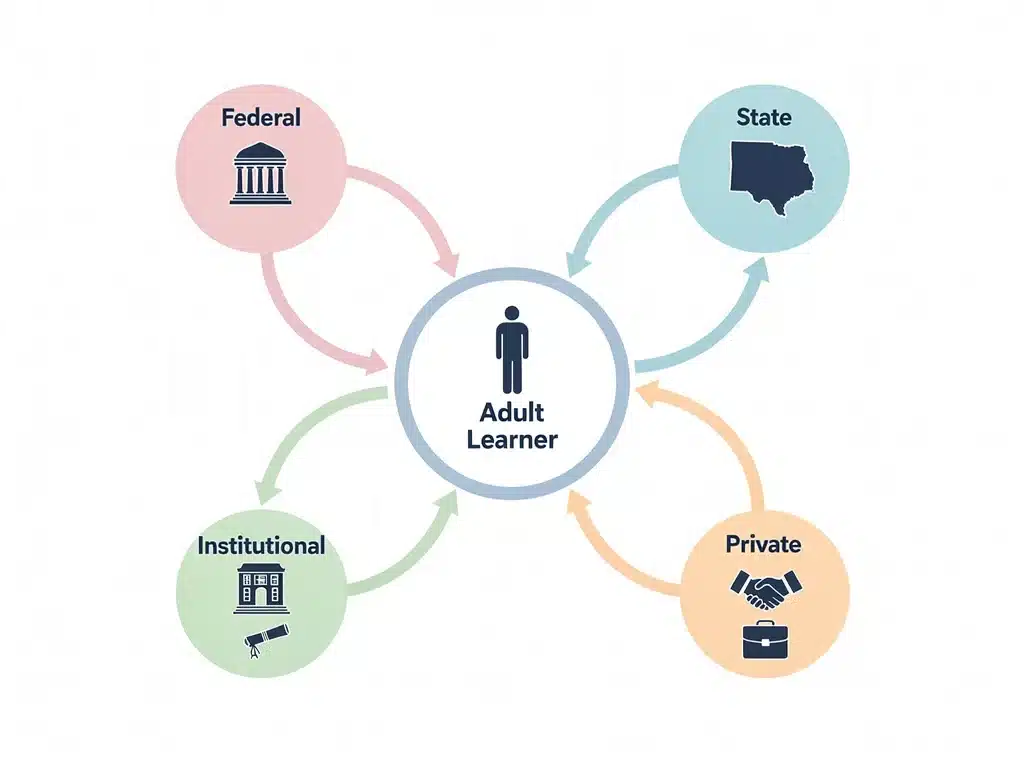
Beyond federal and state programs, a significant portion of US adult education grants for 2026 will come from institutional and private sources.
Colleges and universities often have their own grant programs, and numerous private organizations are dedicated to supporting adult learners.
These grants can be highly specialized, targeting students in particular fields of study, demographic groups, or those with specific life experiences.
Diligent research into these less-publicized opportunities can yield substantial financial rewards.
Many private foundations and corporations view investing in adult education as a way to foster community development and workforce readiness. Their grant programs often reflect these broader philanthropic goals.
University-Specific Aid for Adult Students
Many higher education institutions recognize the unique needs of adult learners and offer specific grants to support their enrollment.
These institutional grants can be based on merit, financial need, or specific program enrollment.
Prospective students should directly contact the financial aid offices of their chosen universities to inquire about available institutional grants.
These offices are a treasure trove of information regarding internal funding opportunities.
Furthermore, some universities have programs designed to help adult students transition back into academic life, often including financial incentives.
Inquiring about these can be a crucial step in securing insider strategies: securing over $10,000 in US education grants for adult learners in 2026.
Private Foundations and Organizations
Hundreds of private foundations and organizations across the US offer grants to adult learners, often with very specific criteria.
These can range from grants for women returning to school, to scholarships for individuals pursuing degrees in specific STEM fields, or even grants based on religious affiliation or ethnic background.
Utilizing scholarship search engines and databases dedicated to private funding is an effective way to uncover these opportunities. Keywords related to your age, background, and field of study can help narrow down suitable options.
Networking within professional organizations or community groups can also reveal lesser-known grants. Often, these grants are less competitive due to their niche focus, increasing your chances of success.
Maximizing Your Eligibility and Impact
To truly maximize your chances of securing over $10,000 in US education grants for adult learners in 2026, it’s essential to understand how to enhance your eligibility and demonstrate your potential impact.
Grant committees look for candidates who are not only deserving but also likely to succeed and contribute positively to society.
This involves strategically presenting your academic record, highlighting relevant work experience, and articulating how your education will lead to tangible benefits for yourself and others.
Every aspect of your profile should underscore your commitment and readiness for higher education.
Consider engaging in volunteer work or community service that aligns with your educational goals. Such activities can significantly bolster your application by showcasing your dedication and leadership potential.
Demonstrating Financial Need and Academic Readiness
While some grants are merit-based, many for adult learners are need-based, requiring a clear demonstration of financial hardship. Providing accurate and comprehensive financial information is critical for these applications.
Beyond financial need, academic readiness is paramount. If you’ve been out of school for a while, consider taking a refresher course or demonstrating your capabilities through standardized tests or professional certifications.
This shows you are prepared for the rigors of higher education.
Highlighting any previous academic achievements, even if from years ago, can also reinforce your readiness. The goal is to provide evidence that you possess the intellectual capacity and discipline to succeed.
The Role of Community Involvement and Leadership
Many grant providers, especially private foundations, prioritize applicants who demonstrate a commitment to community involvement and leadership.
These qualities indicate a well-rounded individual who is likely to make a positive impact post-graduation.
Document any volunteer work, leadership roles in community organizations, or contributions to professional groups. Quantify your impact where possible, showing concrete results of your efforts.
Even if your involvement isn’t directly related to your field of study, it showcases valuable soft skills like teamwork, problem-solving, and dedication. These are highly valued by grant committees looking for future leaders.
Navigating Application Deadlines and Follow-Up
The success of securing over $10,000 in US education grants for adult learners in 2026 heavily relies on meticulous planning and adherence to deadlines.
Missing a deadline, no matter how strong your application, automatically disqualifies you from consideration.
Creating a detailed calendar with all application deadlines, required documents, and submission methods is an indispensable strategy.
Start early, allowing ample time for gathering materials, writing essays, and requesting recommendations.
Proactive follow-up, where appropriate, can also demonstrate your genuine interest and commitment. However, always respect the specific instructions provided by each grant organization regarding inquiries.
Strategic Planning for Multiple Applications
Applying for multiple grants significantly increases your chances of securing funding. However, this requires a strategic approach to manage various requirements and deadlines efficiently.
Develop a master application template that can be customized for each grant. This saves time and ensures consistency in your core information while allowing for specific tailoring to each grant’s unique focus.
Prioritize grants with higher award amounts or those for which you are an exceptionally strong candidate. This optimizes your effort and focuses your resources on the most promising opportunities.
The Importance of Timely Follow-Up
After submitting your applications, understanding the appropriate follow-up protocol is important. Some organizations provide clear timelines for notification, while others may require you to check an online portal.
Resist the urge to send incessant emails or calls, as this can be counterproductive.
Instead, make a note of when you expect to hear back and only follow up if that period significantly passes without communication, and if the grant guidelines permit.
A polite, concise inquiry can confirm receipt of your application and reiterate your interest, but it should always adhere to the organization’s stated communication preferences.
Common Pitfalls and How to Avoid Them
Even with a strong profile, adult learners can encounter pitfalls that jeopardize their chances of securing US education grants for 2026.
Awareness of these common mistakes is the first step toward avoiding them and ensuring a smooth application process.
From incomplete applications to failing to meet specific eligibility criteria, seemingly minor errors can have significant consequences. A meticulous review process can prevent these oversights and strengthen your overall submission.
Remember that grant committees review numerous applications; any error, however small, can be a reason for disqualification in a competitive environment. Precision and completeness are paramount.
Incomplete or Inaccurate Information
One of the most common reasons for grant application rejection is incomplete or inaccurate information. This includes missing documents, incorrect financial details, or errors in personal data.
Double-check every piece of information and ensure all required forms are attached and correctly filled out. Having a trusted friend or mentor review your application can help catch errors you might overlook.
Any discrepancy between your application and supporting documents can raise red flags for reviewers, potentially leading to immediate disqualification. Accuracy is non-negotiable.
Failing to Tailor Applications
Submitting generic applications that are not tailored to the specific grant’s objectives is another frequent mistake. Grant providers look for applicants who understand their mission and align with their goals.
Take the time to research each grant thoroughly and customize your personal statement and other relevant sections to address their specific requirements and interests. This demonstrates genuine interest and effort.
A tailored application shows respect for the grant provider and significantly increases your chances of standing out from the crowd, ultimately helping you secure insider strategies: securing over $10,000 in US education grants for adult learners in 2026.
Resources and Tools for Grant Seekers
A wealth of resources and tools exists to assist adult learners in their quest for US education grants in 2026. Leveraging these effectively can streamline your search process and uncover opportunities you might otherwise miss.
From online databases to university financial aid advisors, utilizing all available support systems can significantly enhance your grant-seeking success.
These resources provide up-to-date information and guidance tailored to your specific needs.
Don’t underestimate the value of workshops or webinars offered by educational institutions or non-profit organizations. They often provide invaluable tips and direct access to experts in financial aid.
Online Grant Databases and Search Engines
Numerous online platforms specialize in compiling education grant opportunities, making the search process far more manageable.
Websites like Scholarship.com, Fastweb, and the US Department of Labor’s CareerOneStop are excellent starting points.
These platforms often allow you to filter grants by specific criteria, such as age, field of study, geographic location, and demographic background. Regularly checking these databases for new listings is advisable.
Creating profiles on these sites can also lead to personalized grant recommendations delivered directly to your inbox, saving you time and ensuring you don’t miss relevant opportunities.
University Financial Aid Offices
The financial aid office at your prospective or current university is an invaluable, often underutilized, resource. These professionals are well-versed in federal, state, and institutional grants, and can provide personalized guidance.
They can help you navigate the FAFSA process, identify university-specific grants, and even assist with appeals if your initial financial aid package is insufficient. Building a relationship with your financial aid advisor can be incredibly beneficial.
Many offices also host workshops on financial literacy and grant application strategies, providing hands-on support to adult learners. These services are designed to help you secure the funding you need.
Projecting Your Financial Needs for 2026
Accurately projecting your financial needs for 2026 is a critical step in securing over $10,000 in US education grants for adult learners.
Understanding your total cost of attendance, including tuition, fees, books, and living expenses, allows you to target appropriate grant amounts.
Creating a detailed budget that accounts for all educational and personal expenses will provide a clear picture of the funding required.
This projection demonstrates to grant providers that you have a realistic understanding of your financial situation.
Anticipate potential changes in tuition rates or living costs that might occur by 2026. A well-researched financial plan reinforces your preparedness and seriousness as an applicant.
Budgeting for Tuition and Living Expenses
Tuition and fees constitute a significant portion of educational costs, but living expenses can often be just as substantial for adult learners.
Factor in housing, transportation, childcare, and healthcare when calculating your total need.
Explore options for reducing living expenses, such as commuting, utilizing public transport, or seeking affordable childcare solutions. Every saving contributes to reducing the overall grant amount you need to cover.
Many universities provide estimated costs of attendance, which can serve as a helpful starting point for your personal budget. Customize these estimates to reflect your specific circumstances.
Considering Opportunity Costs and Income Loss
For adult learners, pursuing education often involves significant opportunity costs, such as reduced work hours or temporary income loss.
Acknowledge these factors in your grant applications where appropriate, as they underscore your commitment and financial need.
While grants primarily cover direct educational expenses, demonstrating an understanding of the broader financial impact of returning to school can strengthen your narrative. This shows a holistic view of your investment in education.
Some grants are specifically designed to help offset income loss for adult students, so actively seek out programs that recognize these unique challenges faced by non-traditional learners.
| Key Strategy | Brief Description |
|---|---|
| Federal Aid Maximization | Complete FAFSA accurately and early to access Pell Grants and other federal programs. |
| State & Institutional Research | Explore state-specific grants and university-specific aid for adult learners. |
| Compelling Applications | Craft strong personal statements and secure powerful letters of recommendation. |
| Private Grant Pursuit | Utilize online databases to find niche grants from private foundations and organizations. |
Frequently Asked Questions About Adult Education Grants
The most crucial first step is completing the Free Application for Federal Student Aid (FAFSA) as early as possible. This form determines eligibility for federal grants, which are often the largest source of aid. Accurate and timely submission is paramount for securing over $10,000 in US education grants for adult learners in 2026.
Yes, many state and private organizations offer grants targeting adult learners who are re-entering higher education. These often recognize the unique challenges faced by returning students. Researching state education department websites and scholarship databases with keywords like “returning adult student grants” is highly recommended.
To make your application stand out, craft a compelling personal statement that highlights your unique journey, motivations, and future goals. Tailor each application to the specific grant’s mission, demonstrate financial need clearly, and secure strong, personalized letters of recommendation. Attention to detail is vital for securing over $10,000 in US education grants for adult learners in 2026.
University financial aid offices are invaluable resources. They can guide you through the FAFSA, inform you about institutional grants, and assist with appeals. They possess expert knowledge of various funding opportunities and can provide personalized advice to maximize your financial aid package.
Absolutely. By strategically combining federal Pell Grants, state-specific aid, institutional scholarships, and grants from private foundations, adult learners can often secure well over $10,000 in non-repayable funds. A comprehensive and persistent application strategy across multiple sources is key to achieving this goal.
What this means
The pursuit of higher education for adult learners in the US continues to evolve, with ample grant opportunities available for 2026.
Understanding the multifaceted landscape of federal, state, institutional, and private funding is crucial. The emphasis remains on meticulous preparation, tailored applications, and early engagement with financial aid resources.
Future developments may introduce new programs or adjust existing ones, underscoring the need for ongoing vigilance and adaptability.
Successfully navigating this competitive landscape requires strategic positioning.
Much like how market participants track specialized data to find high-probability setups—such as monitoring corporate insider trading activity strategies to anticipate major corporate shifts—adult learners must systematically track and analyze grant cycles to find the best opportunities.
These insider strategies: securing over $10,000 in US education grants for adult learners in 2026 will empower individuals to achieve their academic and career aspirations.